Tracing the connections between affect, cognition, acoustics, music and quantum mechanics
QUANTUM COGNITION
Another theory-based week, before I start some practical experiments. Moving on from the specific artistic context of quantum affect, I came across some very interesting research into how some aspects of cognition, specifically human decision-making, can be better explained using quantum probabilities and taking in to account quantum theoretical phenomena such as superposition. Quantum models have features such as contextuality, interference effects, order effects and constructive judgements that align well with the it is believed that human decision-makers process information.*
Yearsley JM (2017) Advanced tools and concepts for quantum cognition: A tutorial. Journal of mathematical psychology 78: 24-39.
QUANTUM SOUND
Taking inspiration from quantum cognition, acoustic scholars Rochesso and Mannone* have proposed a quantum theory of sound. In their research they suggest using vocal sound as a way to make non-speech sounds concrete, embodied and audible.
Apparently our hearing system acts as a sort of destructive measurement apparatus, which continually collapses superpositions of phonetic states into streams, whose evolution we can sing out and follow, wiht teh possibility of jumping from one stream to another as a result of hidden or apparent sources” p292
As I understand it, what the researcher’s mean by this is that we can perceive individual streams of auditory information - for example a particular vocalist’s voice - and follow it within a mass of sound even when its pitch, for example, coincides with another musical stream. According to the researchers, this is something that can be understood more satisfactorily through quantum mathematical models than classical ones. They are not suggesting that sound itself is quantum, but rather than something about the way we perceive and resolve uncertainty in sound may harness quantum processes. The authors conclude:
“The proposed theory enhances the role of quantum theory and of the underlying mathematics as a connecting tool between different areas of human knowledge. By flipping the wicked problem of finding intuitive interpretations of quantummechanics, we aimed at using quantum mechanics to interpret something that we have embodied, intuitive knowledge of.” p292
Equally I am wondering - as I suggested in my previous post under the heading quantum affect - how and whether the deliberate use of ambiguous or acausal sound in an art installation might help convey an embodied sense of the emergent possibilities involved in quantum states.
*Rocchesso D and Mannone M (2020) A Quantum Vocal Theory of Sound. Quantum information processing 19(9).
THE SHAPE OF MUSIC
Although the specific tunings and note divisions in Western music is culturally contingent, the overal relational structure of musical pitch is made up of octaves, which relate to each other non-arbitrarily. The structural relations between octaves is absed on an organisational mode that occurs in nature and is mathematically derived from the real-world physical properties of audio waves. For example, a note, let’s say the A above middle C on the piano keyboard (also known as A4) tuned in standard ‘concert pitch’ vibrates at a frequency of 440 Hz. The octave above (A5) vibrates at double that frequency (880 Hz), two above (A6) at 1160 Hz and one below (A3) at half the frequency of A4 (220 Hz).
If you follow this doubling about forty times, moving quickly way above the frequency level of audible sound, you reach the range occupied by visible light. Although light propagates as a different kind of wave than sound does, there is a nice organisational parallel that can servie to remind us that sound and light waves are both related to wave motions in time. However, unlike audible sound that spans around ten octaves, the entire visible light spectrum occupies less than one ‘octave’ in the sense that it doubles it’s frequency only once between the deep red and violet ends of the spectrum. Newton famously decided there were seven colours in the rainbow because he wanted to draw a parallel between musical harmonies and light.*
https://www.thecolumbiasciencereview.com/online-articles/newton-and-the-science-of-color
partials/ harmonics
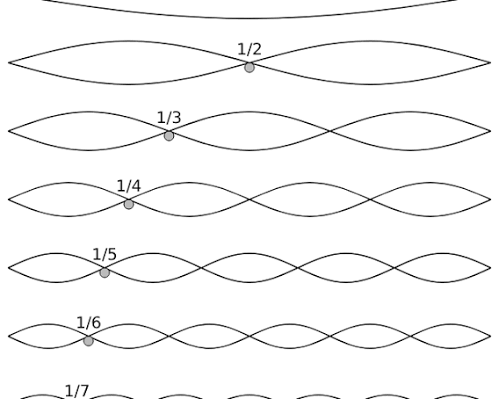
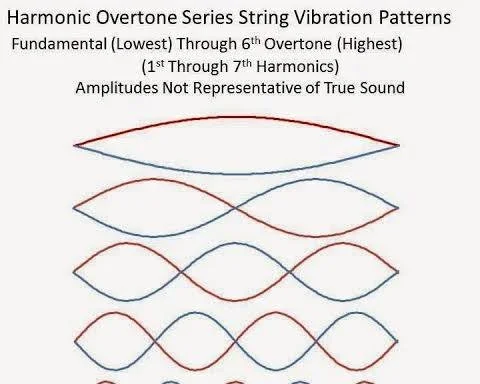
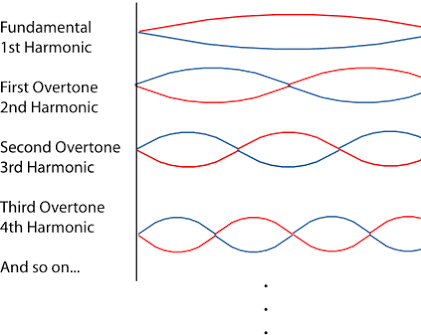
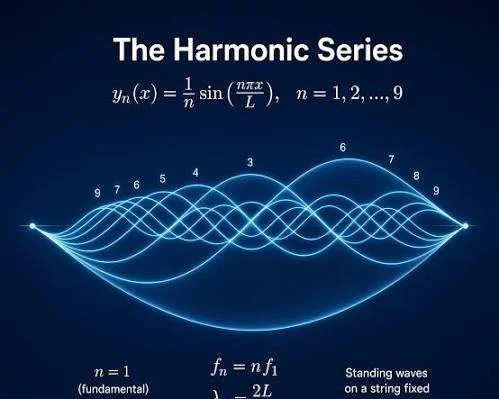
The timbre of instruments such as piano, flute or violin depends on the way it mixes the different parts of a note. Each note is made up of parts, known as partials. These consist of a fundamental tone, which our ears perceive as the pitch of the note, and higher partials known as harmonic overtones that go up in pitch and frequency in a sequence of multiples of whole numbers. The first harmonic multiplies by 2 (A4 at 440 Hz becomes A5 at 880 Hz for example, a step of one octave. The second multiples by 3 (A4 at 440 Hz becomes 1320 Hz which is E6) and so on.
NB: These natural harmonic frequencies are approximated in standard concert tuning. For example the 1320 Hz second harmonic of A4 is actually slightly sharp of E6. This is because the organisational principle behind standard concert tuning anchored at A4 440 Hz is based on 12TET (twelve tone equal temperament) meaning the octave is divided equally into 12 intervals or (semitones). This compromise sacrifices the perfect tuning of of major and minor thirds in favour of fifths, but means that all of the musical keys can be played without retuning.
The phenomenon of harmonics arises because of the way wind and string instruments are designed. Some other instruments, that give rise to less contstrained sounds, like cymbals (and ‘noisy’ natural sounds) are caused by their production of inharmonic partials because their vibrations are not limited to whole number multiples, by virtue of their open ended design.
Standing Waves & Integer Multiples (1D Tethered Strings)
When a string is fixed at both ends, waves can only fit inside it as whole-number subdivisions (1 whole, 2 halves, 3 thirds, etc.). Each additional segment multiplies the vibration frequency by an integer (1f, 2f, 3f, 4f).
Inharmonic Overtones (2D Drumheads & Plates)
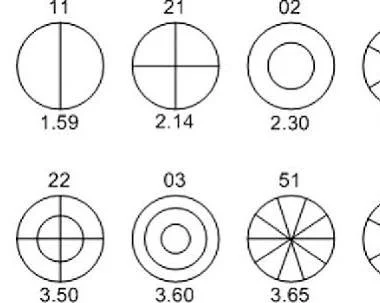
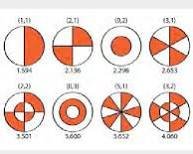
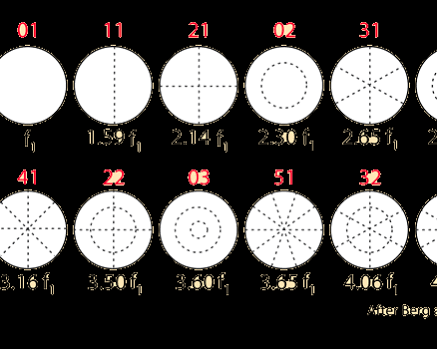
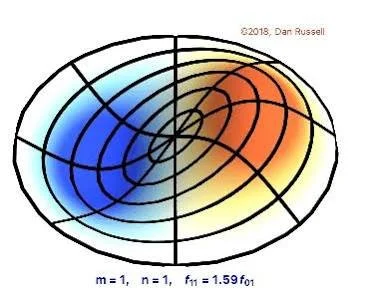
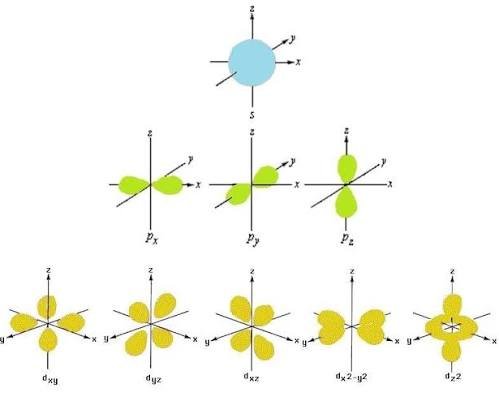
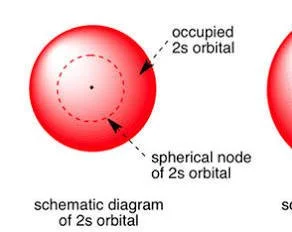
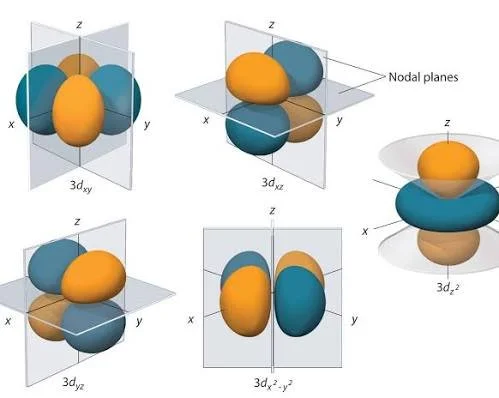
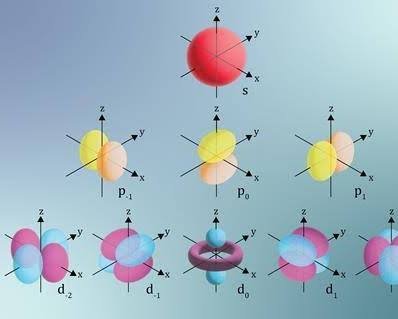
When vibrations spread across a two-dimensional surface like a drumhead or metal plate, they form circular and radial patterns (Chladni figures). These produce complex, non-integer ratios (1.00, 1.59, 2.14, 2.30) that give percussion and bells their unpitched or metallic character. It has been suggested that these complex standing wave patterns are mathematically analogous to the standing wave probability patterns in atoms, and therefore can be used to understand them.
Analyzing the vibrating drum head problem explains percussion instruments such as drums and timpani. However, there is also a biological application in the working of the eardrum. From an educational point of view the modes of a two-dimensional object are a convenient way to visually demonstrate the meaning of modes, nodes, antinodes and even quantum numbers. These concepts are important to the understanding of the structure of the atom.
https://en.wikipedia.org/wiki/Vibration_of_a_circular_membrane
Sine/ Square/ Saw - waves
I’ve seen these shapes a million times, usually in relation to musical synthesis, but I’ve never understood before that their shape relates to their harmonics. Apparently a sine wave has no harmonics, a square wave has only odd harmonics, and a saw wave has both odd and even harmonics, which is why they sound so different. I will source this properly another time.
could an art installation use a vibrating membrane to give somatic insight into the quantum realm?
Proprioceptive art
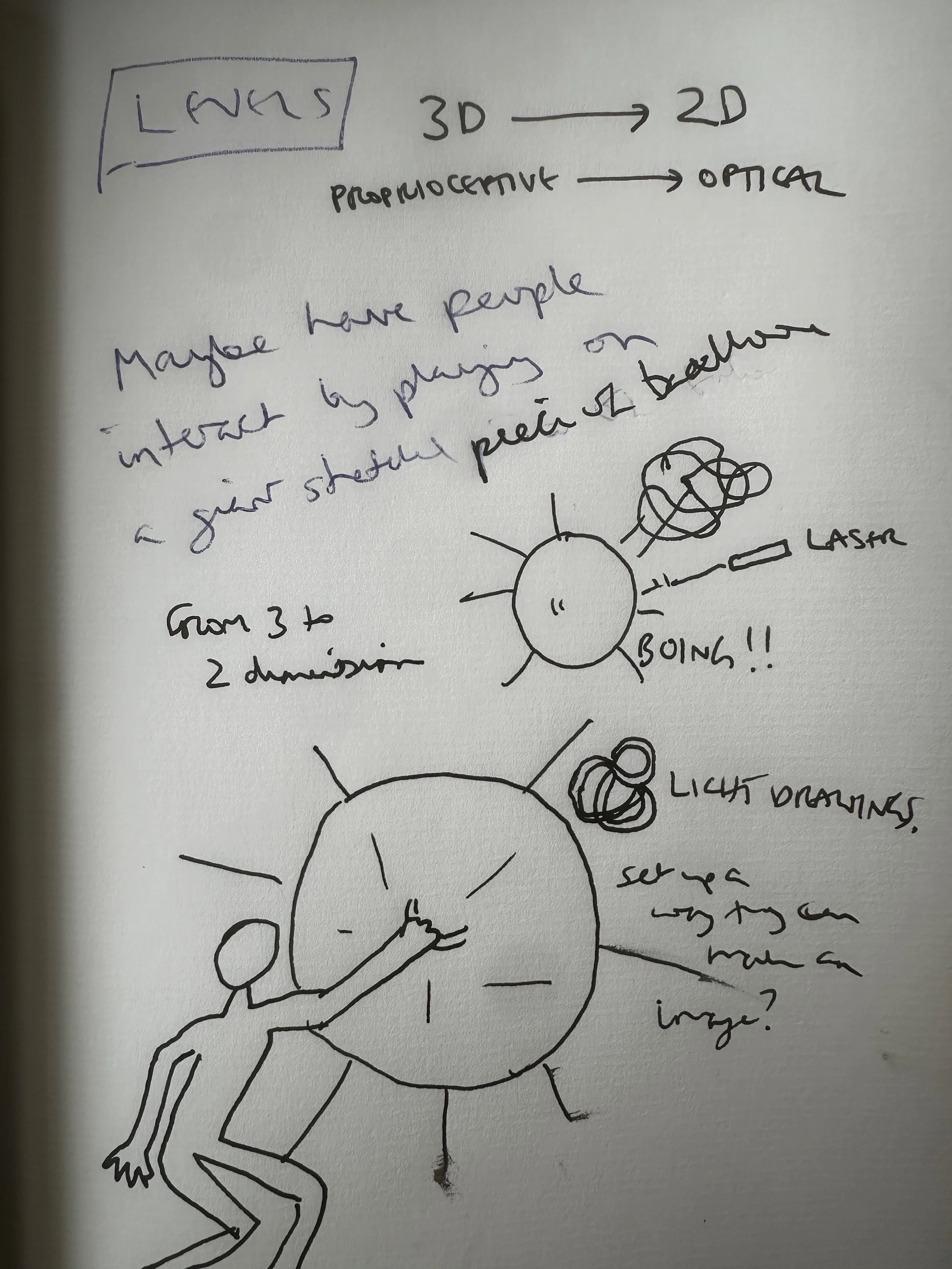
Markus Schrenk is a philosopher of aesthetics whose project ‘proprioceptive art’*:
…poses the radical question whether there could be artworks that are essentially proprioceptive in nature, i.e. that have the perception of one’s own body’s movement and position in space, balance, muscle tension, stretching, pain, temperature, energy and stress levels, etc., at their core (while paying less attention the other senses).
I’m aware of writing on installation art, that although not defining it as proprioceptive, considers the embodied immersion of the audience to often be central to the experience of the work**, as well as a rich field in moving image studies that deals with the hapticity of visual and, more recently audio and audiovisual hapticity*** as well as scholarship that engages with cinema in relation to the neuroscience of the somatosensory and motor systems via the ‘body’ of the camera****.
Nevertheless, I think the term proprioceptive art could be a usefully direct term to focus in on to the aesthetic of art that engages with immersion, hapticity or embodied interaction more directly, or exclusively, than is found in these fields, as Schrenk suggests.
**Bishop C (2005) Installation Art: a Critical History. London: Tate Publishing.
***Marks LU (2004) Haptic Visuality: Touching with the Eyes. Framework: The Finnish Art Review 2(November).; Marks LU (2002) Touch: Sensuous Theory and Multisensory Media. University of Minnesota Press.; Coulthard L (2012) Haptic Aurality: Resonance, Listening and Michael Haneke. Film-philosophy 16(1): 16-29.
****Gallese V and Guerra M (2019) The Empathic Screen: Cinema and Neuroscience. Oxford: Oxford: Oxford University Press.
3D WAVE SIMULATOR
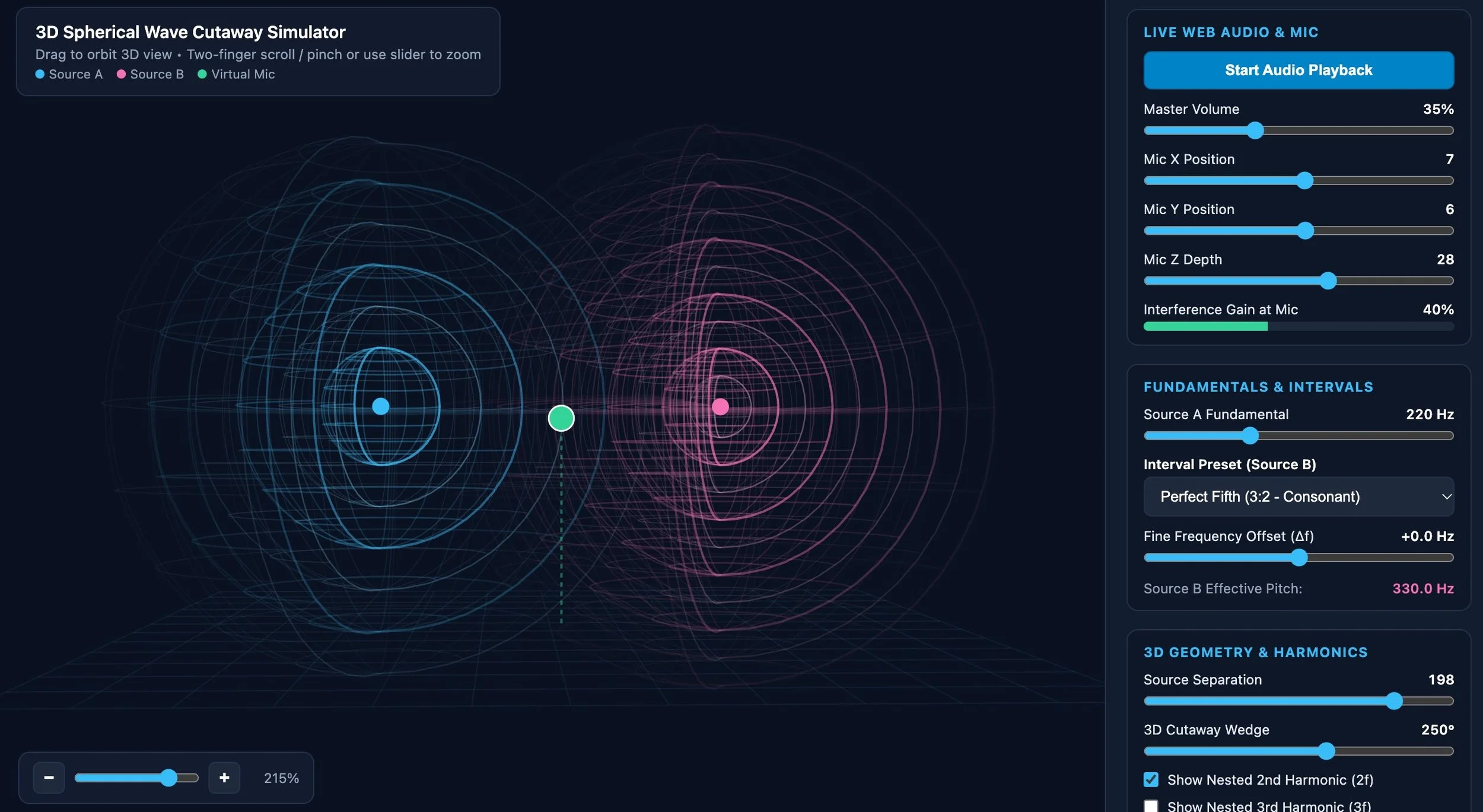
Image is a screenshot from an interactive 3D spherical wave simulator, implemented as a standalone web application using HTML5, CSS3, and vanilla JavaScript, utilizing a custom 3D perspective projection renderer on the HTML5 Canvas 2D API and real-time dual-oscillator synthesis via the Web Audio API.
Made with Google Gemini (2026) HTML5 Canvas 2D and Web Audio API 3D spherical wave simulator [Interactive Simulation]. Response to [Evans, V], 25 November.
When I work out how to embed the simulator itself here I may do so, or in case I’m going to use it in the exhibition I may reserve it until then.